
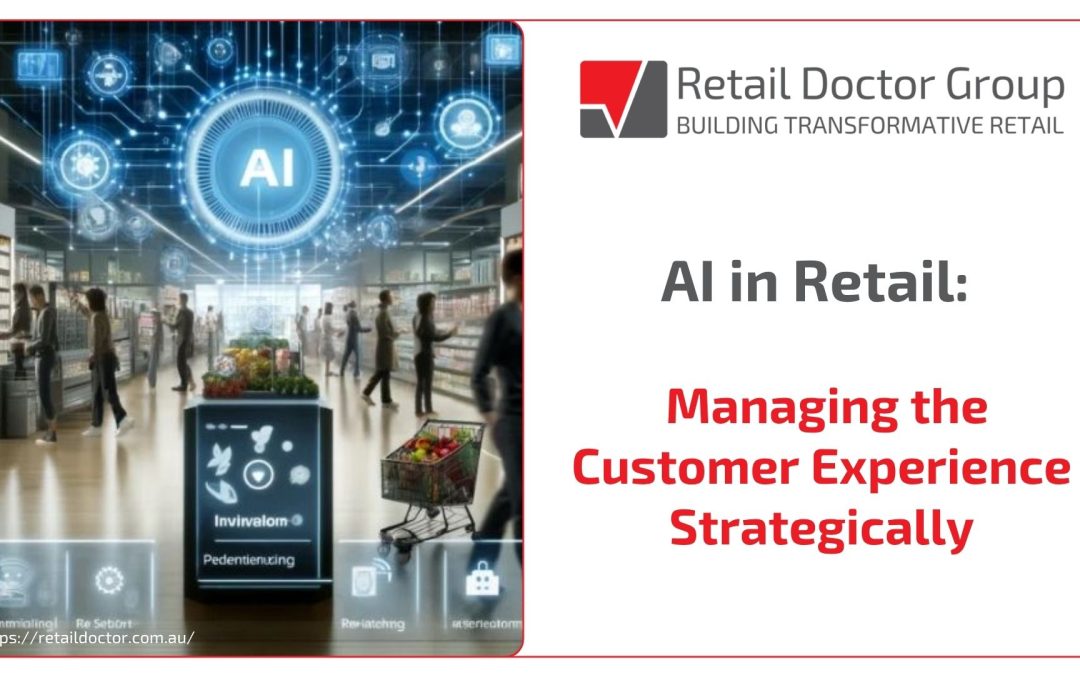
AI has fundamentally reshaped the retail landscape – and that at an unprecedented pace. As consumer expectations evolve and technology capabilities advance, retailers face a critical juncture: adapt to AI-driven consumer behaviours or risk obsolescence. Recent industry analysis reveals four distinct pillars now transforming retail customer experiences – setting the benchmark for how consumers discover, experience, and interact with retail brands.
This strategic framework provides retail leaders with actionable insights to navigate the AI transformation whilst maintaining competitive advantage. Understanding these pillars enables organisations to develop comprehensive strategies that align with emerging consumer expectations and technological capabilities.
ESSENTIAL LISTENING

Pillar 1: Awareness & Discovery – The Transformation of Product Discovery
Traditional product search methodologies are rapidly becoming obsolete. The emergence of agentic (or generative) engine optimisation represents a fundamental shift from keyword-based discovery to conversational, intent-driven interactions. AI-powered discovery systems now understand context, preference, and behavioural patterns in ways that traditional search algorithms cannot match.
“There’s agentic commerce… AI agents that understand ‘find me shoes to match this outfit’ are already here.”
Modern consumers expect discovery experiences that understand nuanced requests and provide personalised recommendations based on comprehensive data analysis. This transformation requires retailers to rethink their entire approach to product visibility, customer acquisition strategies, and customer experience as a whole.
The implications extend beyond simple search functionality. Retailers must consider how their products will be discovered in an environment where AI agents act as intermediaries between consumers and brands. This shift demands new approaches to product data organisation, content creation, and digital presence optimisation.
Strategic Implementation Considerations
Successful implementation of AI-driven discovery requires comprehensive data architecture and sophisticated understanding of consumer behaviour patterns. Retailers must develop systems that can interpret complex queries whilst maintaining accuracy and relevance in their responses.
How Retail Doctor Group Can Support Your Discovery Strategy
Our Limbic Insights™ methodology provides deep understanding of the emotional and psychological drivers behind consumer discovery patterns. Through comprehensive analysis of customer decision-making processes, we help retailers optimise their AI discovery systems to align with actual consumer behaviour rather than assumed preferences.
Our Strategic Workshops guide leadership teams through the complexities of implementing generative engine optimisation strategies. These sessions focus on practical implementation pathways, technology selection criteria, and change management approaches that ensure successful adoption across the organisation.
Recommended Next Steps
- Conduct a comprehensive audit of current discovery mechanisms
- Assess readiness for generative engine optimisation implementation
- Develop a phased approach to AI-powered discovery integration
ESSENTIAL READING
Pillar 2: Enhanced Experience – The Shift from Browsing to Conversation
The traditional website browsing experience is evolving into sophisticated conversational interfaces that leverage multimodal capabilities, uplifting the customer experience. These AI agents can process visual inputs, understand contextual requests, and provide personalised responses based on comprehensive customer data analysis.
“You can ask it, hey, find me this product on your site or here, let me upload a picture of my outfit. Can you find me a pair of shoes that are going to go with it?”
The ability to also use your purchase data and what we know about you, your behaviours and tailor this personalised experience, like you’re talking to someone, is just going to be the future of experience.
This transformation represents more than technological advancement; it fundamentally changes customer expectations regarding interaction quality and personalisation depth. Retailers must develop capabilities that can seamlessly integrate visual recognition, natural language processing, and behavioural analytics to create truly personalised experiences.
The competitive advantage lies not merely in implementing these technologies but in creating experiences that feel natural and valuable to customers. This requires sophisticated understanding of customer psychology and behaviour patterns, combined with technical implementation excellence.
Personalisation at Scale
Modern AI systems enable personalisation capabilities that were previously impossible at scale. By leveraging comprehensive customer data, purchase history, and behavioural patterns, retailers can create experiences that adapt in real-time to individual customer needs and preferences.
The challenge lies in balancing personalisation with privacy concerns whilst ensuring that AI-driven experiences feel authentic rather than intrusive. Successful implementation requires careful consideration of data usage policies, customer consent mechanisms, and transparency in AI decision-making processes.
How Retail Doctor Group Can Enhance Your Customer Experience Strategy
Our Limbic Insights™ approach provides detailed understanding of the emotional triggers and psychological factors that drive customer engagement with AI-powered experiences. We help retailers design interaction patterns that feel natural and valuable to customers whilst achieving business objectives.
Through targeted Retail Skills Training via Retail Doctor Academy courses, we develop your team’s capabilities in managing AI-enhanced customer interactions. Our programmes focus on the human skills that remain critical in an AI-augmented environment, ensuring your staff can effectively collaborate with AI systems to deliver exceptional customer experiences.
Recommended Next Steps
- Evaluate current personalisation capabilities and identify enhancement opportunities
- Develop customer data strategy that supports AI-driven personalisation
- Implement pilot programmes to test multimodal interaction capabilities
READ NEXT
Pillar 3: Autonomous Service – Revolutionising Customer Service Processes
Customer service is experiencing fundamental transformation through AI automation. Modern AI agents can summarise complex cases, route inquiries to appropriate personnel, access comprehensive purchase histories, and execute actions autonomously to resolve customer issues.
This level of automation addresses one of retail’s most persistent challenges: delivering consistent, high-quality customer service at scale. AI-powered service systems can provide immediate responses, access comprehensive customer information, and resolve issues without human intervention in many cases.
The implications for customer experience – and strategic value of AI in retail – extends beyond cost reduction. Automated service systems can operate continuously, handle multiple inquiries simultaneously, and maintain consistent service quality regardless of volume fluctuations or staff availability.
Maintaining Human Connection in Automated Environments
Despite automation capabilities, successful implementation requires careful consideration of when human intervention remains valuable. The most effective approaches combine AI efficiency with human empathy and complex problem-solving capabilities.
“I still believe in this ‘human in the loop’ because not everyone likes to talk. And also the technologies are so new that the responses of these agents, the hallucinations, are not perfect. When there’s a point of escalation, you can always talk to someone.”
This balanced approach ensures that customers receive efficient service for routine inquiries whilst maintaining access to human expertise for complex or sensitive issues. The key lies in designing seamless transitions between AI and human agents that feel natural to customers.
How Retail Doctor Group Can Optimise Your Service Automation
Our Strategic Workshops guide organisations through the complex decisions involved in implementing autonomous service systems. We help identify which service functions are suitable for automation whilst ensuring that human touchpoints are preserved where they add the most value.
Limbic Insights™ provides detailed analysis of customer emotional responses to automated service interactions, enabling retailers to design systems that feel supportive rather than impersonal. Understanding the psychological factors that influence customer satisfaction with AI service helps optimise both system design and human backup procedures.
Through Retail Skills Training programmes, we prepare customer service teams for their evolving roles in AI-augmented environments. Our courses focus on developing skills that complement AI capabilities whilst maintaining the human elements that customers value most.
Recommended Next Steps
- Assess current service processes to identify automation opportunities
- Develop clear escalation protocols for complex inquiries
- Train staff on effective collaboration with AI service systems
READ NEXT
Pillar 4: Future Innovation – Agent-to-Agent Commerce and Beyond
The most transformative development behind AI in retail involves agent-to-agent commerce, where AI assistants acting on behalf of consumers negotiate and transact directly with retailer AI systems. This represents a fundamental shift from human-driven commerce to autonomous commercial interactions.
This evolution suggests a future where personal AI assistants handle routine purchasing decisions, negotiate terms, and complete transactions without direct human involvement. For retailers, this means developing systems that can effectively communicate with diverse AI agents whilst maintaining profitability and customer satisfaction.
The implications extend far beyond transaction processing. Retailers must consider how their brand values, product quality, and service excellence will be communicated to AI agents that lack human emotional responses and brand loyalty patterns.
Preparing for Autonomous Commerce
Successful preparation for agent-to-agent commerce requires retailers to develop new capabilities in AI communication protocols, automated negotiation systems, and dynamic pricing mechanisms. The competitive landscape will be determined by which retailers can most effectively engage with AI agents on behalf of their human customers.
“We’re nearly there in this agent-to-agent operability, and to have agents work on teams… agents that work in teams or together produces much more quality than just a zero-shot prompt.”
This technological capability is approaching commercial viability faster than many retailers anticipate. Organisations that begin preparing now will have significant advantages when agent-to-agent commerce becomes mainstream.
Strategic Investment Priorities
The challenge for retail leaders lies in determining appropriate investment timing and resource allocation for these emerging capabilities. While the technology exists, successful implementation requires careful consideration of customer readiness, competitive positioning, and operational capabilities.
How Retail Doctor Group Can Guide Your Innovation Strategy
Our Strategic Workshops provide comprehensive frameworks for evaluating emerging AI technologies and determining optimal investment timing. We help retail leaders distinguish between promising innovations and practical implementation opportunities whilst developing roadmaps that align with business objectives.
Limbic Insights™ offers crucial understanding of consumer readiness for autonomous commerce experiences. By analysing customer psychological responses to AI-mediated interactions, we help retailers determine when and how to introduce these capabilities without alienating their customer base.
Retail Skills Training programmes prepare teams for the evolving demands of AI-augmented retail environments. Our courses focus on developing strategic thinking capabilities that enable staff to work effectively with AI systems whilst maintaining focus on customer value creation.
Recommended Next Steps
- Evaluate organisational readiness for agent-to-agent commerce capabilities
- Develop pilot programmes to test autonomous interaction systems
- Create long-term innovation roadmaps that align with customer adoption patterns
READ NEXT
Implementation Framework: From Strategy to Execution
Successful AI implementation requires retailers to move beyond tactical technology adoption towards comprehensive strategic frameworks that address all four pillars simultaneously. This integrated approach ensures that AI initiatives reinforce rather than conflict with each other.
The most effective strategies begin with clear understanding of customer needs and business objectives, then identify AI capabilities that can deliver measurable value. This customer-centric approach prevents technology-driven implementations that fail to deliver meaningful benefits.
Managing Organisational Change
AI transformation involves significant organisational change that extends beyond technology implementation. Staff roles evolve, customer interaction patterns shift, and business processes require fundamental redesign to leverage AI capabilities effectively.
“How can we make the customer experience better using AI in retail? What processes do we have in place, and how can they be better?”
Successful change management ensures that AI implementation enhances rather than disrupts existing organisational strengths whilst building new capabilities that support long-term competitive advantage.
Measuring Success and Optimising Performance
AI implementation success requires sophisticated measurement approaches that capture both quantitative performance improvements and qualitative customer experience enhancements. Traditional retail metrics may not adequately reflect the value created by AI-driven initiatives.
Retailers must develop new measurement frameworks that assess AI system performance, customer satisfaction with automated interactions, and overall impact on business objectives. This data-driven approach enables continuous optimisation and informed decision-making about future AI investments.
Next Steps for Retail Leaders
The four pillars of AI transformation represent both unprecedented opportunity and significant challenge for retail organisations. Success requires strategic thinking, careful implementation planning, and continuous adaptation to evolving customer expectations and technological capabilities.
Retailers that embrace these changes whilst maintaining focus on customer value creation will establish sustainable competitive advantages. Those that delay implementation risk falling behind competitors who successfully leverage AI capabilities to enhance customer experiences and operational efficiency.
The time for strategic AI planning is now. The technology exists, customer expectations are evolving, and competitive advantages await retailers who can successfully navigate this transformation.
Embrace the AI-driven future. Succeed in tomorrow’s consumer landscape. It’s (almost) as simple as that.
Ready to Transform Your Retail Strategy?
Retail Doctor Group provides comprehensive support for retailers embarking on AI transformation journeys. Our integrated approach combines deep customer insights, strategic planning expertise, and practical implementation support to ensure successful adoption of AI capabilities across all four pillars.
Let’s talk.
📞 +61 2 9460 2882
✉ businessfitness@retaildoctor.com.au
Authored by: