
Retail 2030 will need leaders who have the ability to build a scalable retail business model that converts growth into enterprise value through consistent execution, predictable unit economics, and disciplined operating structure. The shift is already shaping how investors evaluate retail, how capital is allocated, and how leadership teams make decisions that determine long-term value.
Key Takeaways
- Retail scalability is driven by unit economics, operational discipline, and customer alignment.
- Investment readiness reflects clarity across profitability, execution, and leadership capability.
- Repeatable retail systems enable predictable performance across locations, channels, and markets.
- Simplicity and focus strengthen margin expansion and capital efficiency.
Retail value is built through scalability, where growth is supported by a business model that can be repeated with consistency across stores, channels, and markets. Retail leaders often prioritise growth as the visible measure of success, while investors assess whether that growth can be delivered predictably and sustained over time.
Retail Value Is Built Through Scalability
A scalable retail business model removes variability by embedding discipline into execution. Performance becomes less dependent on individual effort and more reliant on systems that deliver consistent outcomes. This is the difference between growth that expands and growth that compounds into enterprise value.
The investor lens reframes decision-making. Every decision, from pricing to ranging to experience, contributes to the strength of the scalable retail business model. Leadership teams that operate with this perspective build businesses that are transferable, repeatable, and defensible, creating a foundation for long-term value creation.
READ NOW
What Defines A Scalable Retail Business Model
A scalable retail business model is defined by clarity across customer alignment, operational execution, and commercial performance:
- The proposition is clear.
- The customer is well defined.
- The operating model delivers consistency across every environment in which the business operates.
This clarity extends into planning and execution. Structured business planning, aligned local marketing, and a defined strategic direction guide decision-making across the organisation.
Each component of the business operates with intent, ensuring that execution reinforces the model rather than diluting it.
A scalable retail business model also reflects adaptability. Systems, processes, and frameworks reduce reliance on individuals and enable the business to perform consistently regardless of location, team, or channel. This creates independence from the founder and supports the transition from operator-led growth to system-led performance.
These elements align closely with what defines a “fit” business. A fit business demonstrates sales growth, margin strength, and operational consistency, supported by strong people development, evidence-based decision-making, and the ability to invest in growth.
These are not isolated characteristics. They are interconnected components of a scalable retail business model that supports both performance and value.
READ NEXT
Repeatable Systems Drive Retail Scalability
Retail scalability is achieved through repeatable retail systems that deliver consistent outcomes across markets. These systems align inventory, supply chain, store format, customer experience, and decision-making into a single operating structure that can be executed repeatedly.
Lovisa demonstrates this clearly. A systemised model with tight SKU control, fast inventory turns, and a consistent store format enables rapid international expansion supported by strong unit economics. The model is designed for replication, ensuring that performance can be delivered consistently across new markets.
Mecca reflects a different but equally scalable model. Disciplined brand curation, premium positioning, and a consistent customer experience create strong repeat purchase behaviour and margin expansion. The result is a defensible ecosystem where scalability is driven by customer alignment and experience consistency.
Accent Group shows how operational execution drives scalability at scale. A multi-brand portfolio supported by strong supply chain capability and retail execution creates a platform model that delivers consistent performance. Investors back the platform because it demonstrates repeatability across brands and markets.
Gymshark provides a digitally-led example. Community-driven growth and a high-margin direct-to-consumer model established the foundation before physical expansion. The retail rollout followed the proof of the model, reinforcing the principle that scalability is built before it is expanded.
These examples demonstrate a consistent pattern. Growth is not the starting point. It is the result of a model that works consistently.
Unit Economics Define Retail Performance
Unit economics define the performance of a scalable retail business model. They provide clarity on whether growth creates value, with metrics such as store-level profitability, payback periods, and contribution margin acting as indicators of commercial strength.
Retail leaders who focus on unit economics build confidence into expansion decisions. New stores, new channels, and new markets are evaluated against predictable returns, ensuring that growth aligns with capital efficiency and enterprise value.
This focus creates discipline. Pricing, ranging, and experience decisions are aligned to margin expansion and profitability, reinforcing the strength of the scalable retail business model. Without this clarity, growth introduces risk. With it, growth becomes a controlled and repeatable outcome.
Retail Leadership And Investment Readiness
Most retail businesses are not uninvestable, simply not yet investable. The gap is structural, not conceptual, and it is defined by unclear economics, inconsistent execution, and a lack of scalable systems. Closing this gap requires deliberate alignment between strategy, capability, and execution.
Retail investment readiness reflects the strength of the scalable retail business model, where operational execution, leadership capability, and commercial performance align to support growth at scale.
Systemisation is central to this readiness. Documented operations, consistent execution, and data-driven decision-making demonstrate that the business can perform independently of the founder. Leadership capability extends this further, with strong operators, clear accountability, and aligned teams ensuring that performance is sustained across the organisation.
Simplicity also plays a critical role. A focused product range, clear customer proposition, and disciplined execution reduce complexity and support scalability. Complexity introduces friction. Simplicity enables scale.
A credible growth roadmap completes the picture. Investors assess where growth will come from, how it will be delivered, and what capital is required. Clarity in these areas strengthens confidence and positions the business as an investable platform.
ACTION NOW
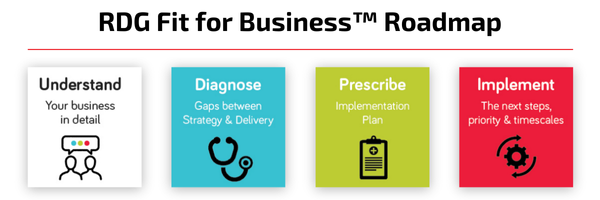
Retail Doctor Group works with retail leaders to build scalable retail business models through Business Fitness™, aligning unit economics, operational execution, and customer strategy into a repeatable system that delivers predictable performance.
Next Steps for Retail Leaders
Retail 2030 requires scalable retail business models that convert strategy into execution, and execution into enterprise value. The focus is not on growth alone, but on building a model that supports growth with consistency and discipline.
How efficient and Fit for Business™ is your retail brand?
Business Fitness™ creates the conditions for a scalable retail business model through stronger systems, clearer economics, and more consistent execution.
Continue the conversation
Engage Retail Doctor Group to assess where Business Fitness™ can strengthen scalability, investment readiness, and enterprise value in your business.
Let’s talk.
📞 +61 2 9460 2882
✉ businessfitness@retaildoctor.com.au
Authored by:
Brian Walker
#RetailStrategy #Retail2030 #ScalableRetail #BusinessFitness #RetailLeadership