
Use this essential guide as a practical retail lens for understanding why customers buy, what motivates them, how loyalty is formed and sentiment is shaped, what quality looks like, and how to build service confidence.
Your customer base isn’t just one customer. It’s a mix of 6 personality types and emotional decision systems that walk through the same store, browse the same website, compare the same product… and still buy for completely different reasons.
Key Insights Into Why Customers Buy
- RDG’s Limbic Insights™ helps retailers understand why customers interpret value, quality, service, risk, and loyalty through different emotional drivers.
- The 6 Limbic personality types show what customers need to feel before a purchase becomes credible, relevant, and worth choosing.
- Customer motivation influences pricing, merchandising, service behaviour, loyalty design, digital experience, and sentiment interpretation.
- Quality, proof, and service become stronger commercial levers when they align with the customer’s emotional reason to believe the purchase is worth making.
- “Why We Buy” defines how emotional confidence shapes whether customers choose, return, recommend, or walk away.
✔️ Download RDG’s “Why We Buy” Whitepaper Now
Retailers often treat value as if every customer measures it the same way. They promote the product, adjust the price, send the same loyalty message, and expect the same offer to create the same response.
RDG’s “Why We Buy” proprietary Limbic Insights™ research highlights why that assumption could be commercially risky.
Customers may explain a purchase through price, service, quality, convenience, brand trust, or rewards. Underneath that explanation sits the emotional reason the purchase felt worth making for 6 distinct emotional decision systems.
- Customer 1 needs proof.
- Customer 2 needs care.
- Customer 3 needs reliability.
- Customer 4 needs progress.
- Customer 5 needs discovery.
- Customer 6 needs permission to feel good.
“Who is buying from us?” is a question that relies on demographics only. RDG’s timely, and more customer centric, questions ask, “What does this specific customer need to feel before they choose us? And what does the next customer need, too?”
The Shift Retail Leaders Need to See
From a retail and motivation-to-buy perspective, ‘the pandemic’ modified personal standards and minimum quality and service level expectations for customers forever. This should have changed how retailers respond to these increased expectations, but only the most progressive of retailers have done that.
Without a Limbic lens on the core 6 customer tribes and their intrinsic needs, demographics remains the only way to try to reach them. Sure, you’ll know who can afford your product, and what fashion items will appeal to which age group, but no amount of marketing will make them buy if their emotional decision systems have not been stimulated or motivated enough to make that purchase.
RDG’s “Why We Buy” research decisively echoes this. Customers are more selective about what feels worth their money, time, and attention: only 16% of consumers feel financially comfortable, yet 53% are still spending on what matters most to them.
The customer hasn’t disappeared. The easy yes has.
Retailers that read this only as a cost-of-living issue risk missing the larger behavioural shift. Customers are protecting more than money. They’re protecting confidence, trust, time, emotional energy, household priorities, and the feeling that the decision will still hold after money has changed hands.
Loyalty forms when the brand keeps confirming the emotional reason the customer chose it. Sentiment becomes a useful guide when retailers understand which emotional filter sits underneath caution, confidence, delay, or willingness to pay more.
Before applying this thinking to your customer base, take the Limbic test yourself. It quickly shows why one person looks for proof, while another looks for reward, status, care, stability, or discovery before a purchase feels right.
✔️ Take the Limbic Test Yourself
RDG’s Limbic Insights™ methodology is more than just great research language. Once you see your own buying lens, you’ll see why a generic customer message weakens value. Additionally, retailers who take the test will better understand which Limbic personalities dominate their base before making enterprise decisions about pricing, service, loyalty, media, merchandising, digital experience, or store execution.
The Difference Between Demographics and Limbic Insights™
Two customers can look identical in a database and still buy for different reasons. They may share an age band, household profile, income bracket, suburb, category interest, and channel preference. On paper, they look useful to target in the same way.
However, their emotional logic will split completely at the point of decision, based on specific feelings about their purchase:
- reassurance that the product won’t disappoint
- confidence that the purchase reflects a higher standard
- trust that the household purchase made is the right one
- a fresh, expressive, or rewarding experience
RDG’s Limbic Insights™ delivers value by profiling customers with the emotional lens through which they interpret cost, risk, reward, and trust. That lens changes how they respond to price, service, proof, quality, loyalty, and brand messaging.
Retailers that rely only on demographics risk using the wrong message, proof point, offer, or service cue. They may reach the customer but fail to convert the decision.
The 6 Personality Types Buying From You
RDG Limbic Insights™ identifies six distinct personality types that help retailers understand the emotional drivers behind consumer behaviour. These aren’t decorative personas. They explain what customers need to feel before a purchase becomes safe, useful, rewarding, credible, or worth repeating.
Each personality has a unique reason to believe claims of value, differing risk triggers, and different loyalty pathways. The same product may matter to all six, but it will rarely matter in the same way.
RDG’s “Why We Buy” Limbic Insights™ whitepaper explains the emotional drivers behind your 6 customer’s choices and their purchase decisions.
1. DATA DYNAMOS
– Buy when the decision feels well considered
Data Dynamos are driven by discipline, rationality, diligence, reason, and precision. They need the purchase to feel logical, useful, and well considered before they act.
This customer wants substance. They don’t want theatre. They want evidence that helps them make the right decision.
- Value confidence builds when the retailer reduces mental load.
- Loyalty grows when the retailer becomes a reliable source of clarity.
- Sentiment improves when the customer feels the brand respects their need to think properly before they buy.
2. AMBITIOUS ACHIEVERS
– Buy when the choice feels worth their standards
Ambitious Achievers are driven by performance, determination, success, status, and ambition. They need confidence that the purchase is smart, credible, and worth their standards.
This customer isn’t automatically chasing the lowest price. They’re looking for the reason a better product, stronger brand, or higher standard is worth paying for.
Quality is a commercial lever, but it has to be felt before it protects margin.
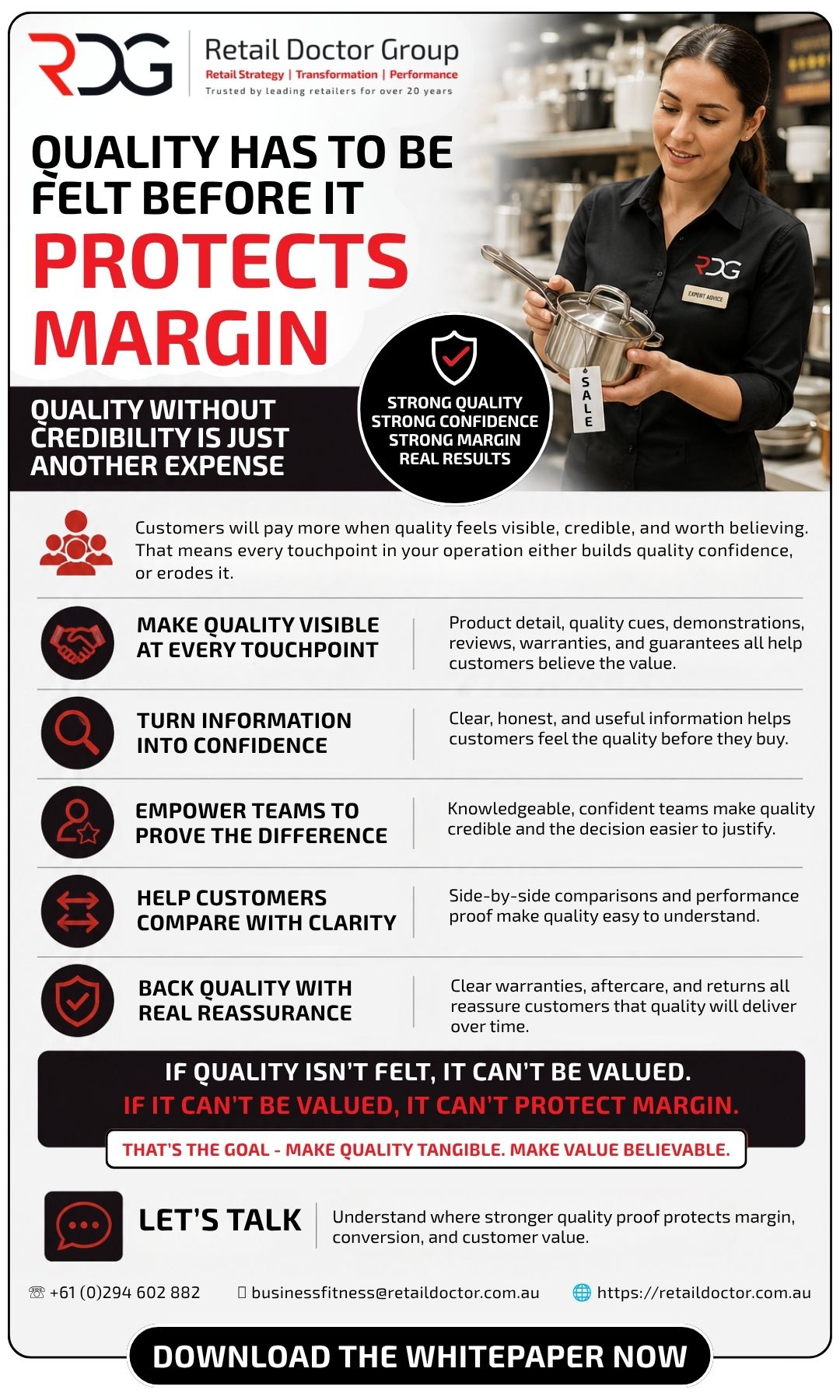
Quality can’t remain assumed inside the product. When customers can’t feel it, price carries too much pressure.
3. EXPERIENCE EVANGELISTS
– Buy when the brand gives them a reason to explore
Experience Evangelists are driven by curiosity, spontaneity, variety, fun, and creativity.
This customer can lose interest quickly when the experience feels flat. They respond to brands that give them something to talk about.
Loyalty needs energy, and points alone may not be enough. The relationship needs a sense that the brand is still giving them something new to discover.
Sentiment can shift quickly with this tribe because freshness matters.
4. OPEN MINDED
– Buy when the purchase allows them to feel good
Open Minded customers are driven by wellbeing, pleasure, openness, fantasy, and sensuality.
This customer buys emotional payoff. They need permission to treat themselves, express personal style, or improve how life feels.
RDG’s proprietary research shows that 37% of consumers buy to reward themselves or lift their mood, while 36% buy to improve their home or lifestyle. Discretionary spending can therefore continue – even in a cautious market – when the emotional return feels clear.
The retailer needs to make the after-feeling visible. What makes the purchase more personally meaningful gives the customer stronger permission to choose.
5. FAMILY FOLLOWERS
– Buy when the purchase feels sensible, caring, or useful
Family Followers are driven by harmony, family, home, trust, and care. They need the purchase to feel sensible, caring, and beneficial for the household.
This customer assesses value through responsibility as much as desire. They respond strongly to positive signals such as trusted reviews, clear guarantees, and simple returns.
- Loyalty grows when the retailer proves it understands real life conversion.
- They’ll still spend under pressure – when the purchase protects comfort, family routines, household function, or care.
6. LOGICAL LOYALISTS
– Buy when the brand feels reliable and dependable
Logical Loyalists are driven by tradition, safety, reliability, order, and conservatism. They need proof, stability, and confidence that the product won’t disappoint.
This customer doesn’t want noise or novelty for its own sake. They want the decision to feel low-risk.
Loyalty is built gradually, by delivering the expected standard repeatedly. They’ll switch when reliability breaks, because trust is central to the relationship.
For this tribe, sentiment is tied to stability and dependability.
Service Needs for 6 Personality Types
Service looks simple from the outside. At the coalface, it has to solve different problems for each of the 6 emotional decision systems.
That means service can’t be reduced to friendliness. It becomes a confidence system when teams understand what kind of uncertainty the customer needs resolved.
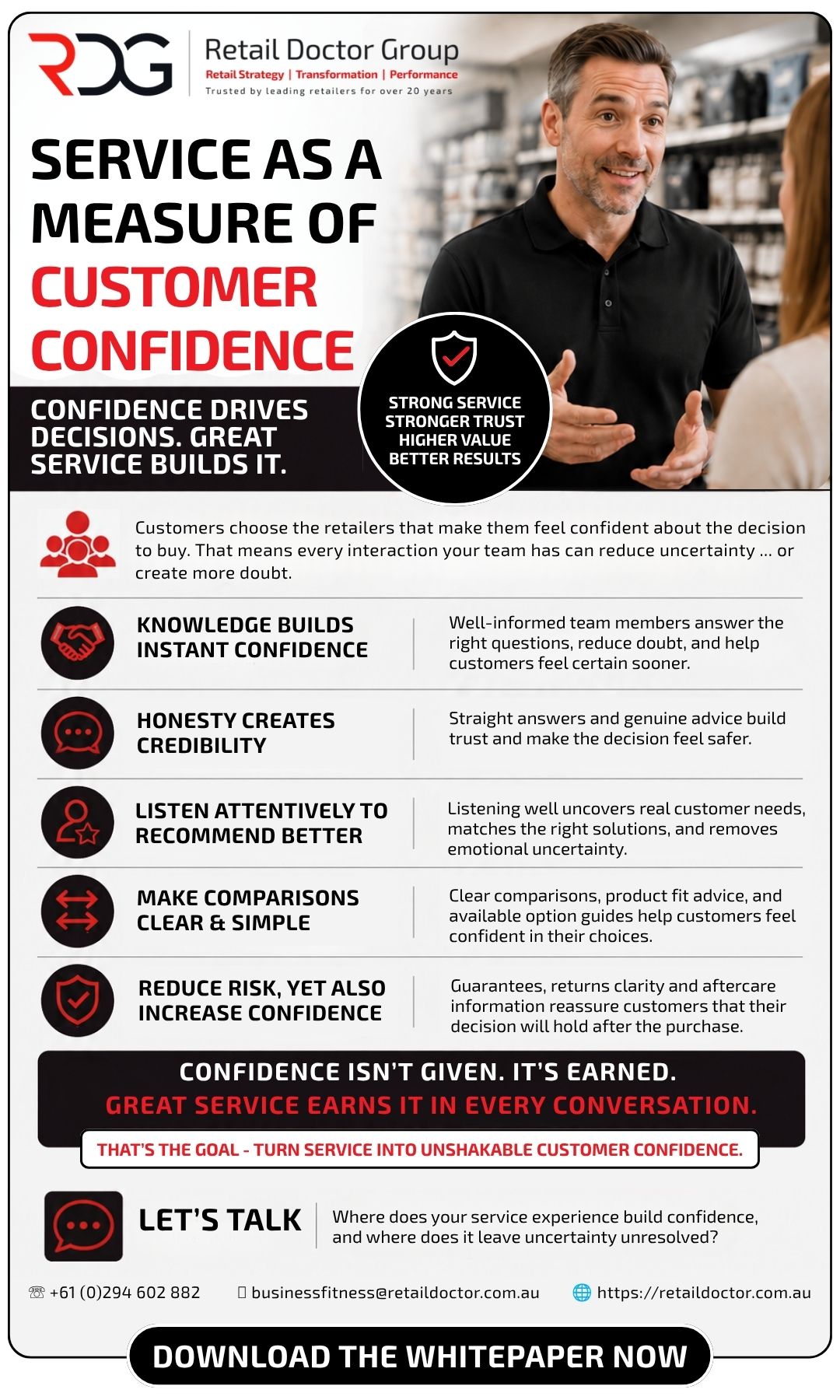
Knowledge, honesty, listening, comparison, and risk reduction aren’t soft behaviours. They influence whether the customer feels informed, understood, reassured, and ready to choose.
RDG’s “Why We Buy” whitepaper shows that team members matter most when they are knowledgeable and honest. That finding should change how retailers think about service training.
The goal isn’t to make teams more scripted. It’s to make service more precise, useful, and confidence-building.
Reading Loyalty Through a Limbic Lens
Loyalty therefore doesn’t mean the same thing to each personality type. That’s why it can’t sit only inside points, discounts, and redemption mechanics. Rewards can bring a customer back, but emotional value gives them a reason to do that.
When loyalty programs reward behaviour without recognising motivation, they risk becoming a cost. When they strengthen the customer’s reason to return, loyalty becomes a growth system.
Loyalty and sentiment are often discussed as one customer mood:
- Confidence is high or low.
- Spending is strong or weak.
- Customers are cautious or comfortable.
That view can be useful at market level, but it becomes blunt inside a retail business.
RDG’s Proven, Proprietary Mehodologies and Frameworks
RDG’s Limbic Insights™ gives retailers an emotional map that identifies which personality types dominate the customer base, what those customers need to feel, and where the brand may be misreading value, risk, reward, or trust.
- RDG’s Fit for Business™ tests whether the operating model can deliver that emotional promise consistently.
- Mystery Shopping shows what actually happens through service, proof, store execution, and customer interaction.
- Loyalty Diagnostics can assess whether the relationship is reinforcing the right emotional reason to return.
The RDG Retail Value Index then gives this work a measurement lens. It helps retailers assess the intangibles that make value, trust, and proof convert into emotional loyalty.
But retailers can’t improve what they can’t see. Behavioural data tells only part of the story. Limbic-led measurement shows why the behaviour happens and where retail execution needs to change, completing the bigger picture.
Top 7 Questions Retail Leaders Need to Ask
Retail leaders need to move from broad customer assumptions to sharper commercial questions.
- Which Limbic personalities dominate the customer base?
- What emotional role does the brand need to own?
- Which service cues build confidence, and which create doubt?
The next questions sit even closer to execution, moving our proprietary research from insight into retail decision-making.
- Can customers feel the quality they’re being asked to pay for?
- Does the loyalty program reinforce the emotional reason customers return?
- Does the digital experience resolve risk, or does it add friction?
- Are marketing, merchandising, pricing, and store execution speaking to the same emotional need?
Retailers that understand Limbic differences can make better decisions. “Why We Buy” helps retailers read these emotional decision systems properly.
RDG’s “Why We Buy” Limbic Insights™ whitepaper unpacks the emotional drivers behind your 6 customer’s choices and their purchase decisions.
✔️ Download RDG’s “Why We Buy” Whitepaper Now
Frequently Asked Questions
Authored by: