

Retail decision making is a complex combination of thought processes that sit largely below conscious awareness, where emotional systems shape preference, influence choice, and determine how customers respond to brands, products, pricing, and experiences.
Retail performance isn’t driven by what customers say, but by how they decide what to buy, where to buy, and even how much to buy. Research shows that up to 95% of decisions occur in the subconscious Limbic system, operating significantly faster than conscious processing. That’s why understanding why customers buy requires moving beyond demographics and into the emotional drivers that shape behaviour at scale.
This article provides board-level clarity on RDG Limbic Insights™ and its role in defining customer behaviour, improving alignment, and driving performance.
Key Takeaways
- Retail decision making is primarily driven by subconscious emotional systems, not rational evaluation.
- RDG Limbic Insights™ identifies distinct customer personalities that determine how decisions are made.
- Effective retail strategy aligns pricing, range, experience, and communication to these personality drivers.
- Customer alignment improves conversion, margin, and repeat behaviour.
- Retail performance strengthens when emotional drivers are translated into execution.
Retail Performance Is Driven By Subconscious Decision Making
Retail leaders often rely on observable metrics such as sales, traffic, and conversion to understand performance. These metrics certainly describe what’s happening in the business but don’t explain why it’s happening.
The underlying driver sits in the subconscious, where customers process information rapidly and form preferences before conscious evaluation begins. This creates a disconnect between what customers report and how they actually behave.
RDG Limbic Insights™ addresses this gap by identifying the emotional drivers that influence behaviour, enabling retailers to align strategy with how customers actually make decisions rather than how they describe them.
The Three Emotional Systems That Shape Retail Decision Making
All consumers operate across three core emotional systems that influence behaviour to varying degrees. These systems form the foundation of personality and define how individuals respond to retail stimuli.
- Balance reflects the need for security, stability, and trust. Customers influenced by this system prioritise reliability, familiarity, and reassurance in their purchasing decisions.
- Stimulation reflects the desire for novelty, discovery, and excitement. Customers influenced by this system respond to innovation, newness, and experiential engagement.
- Dominance reflects the drive for control, status, and achievement. Customers influenced by this system prioritise performance, efficiency, and outcomes that reinforce their position.
Each individual operates across all three systems, with one or two typically more dominant, shaping their personality and influencing their buying behaviour.
RDG Limbic Personalities In The Retail Context
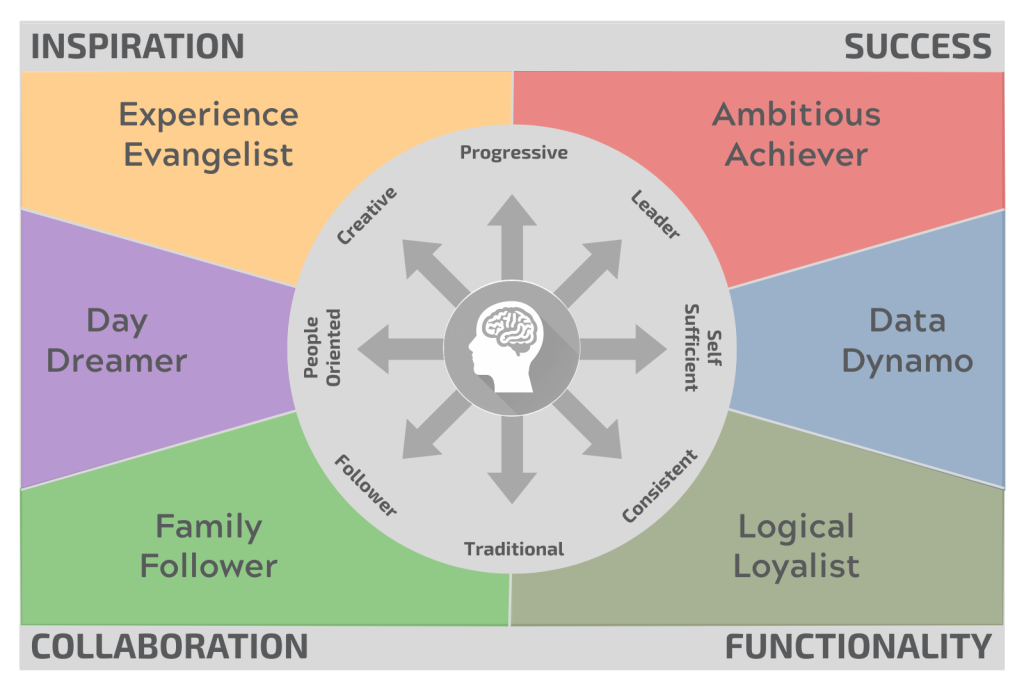
RDG Limbic Insights™ translates these emotional systems into proprietary consumer personalities that define how customers behave in a real-world retail environment.
These personalities move beyond generic segmentation to identify the real drivers of behaviour, including motivations, barriers, preferences, and triggers that influence purchase decisions.
In retail context, these personalities determine:
- How customers perceive value and price
- What products and categories they prioritise
- How they respond to store environments and digital experiences
- What drives trust, loyalty, and repeat behaviour
- How they move through the path to purchase
The research is not theoretical. Understanding these personalities enables retailers to define their true customer, identify high-value segments, and focus investment where it drives the strongest commercial return.
Personality Triggers And Barriers In Retail
Each RDG Limbic personality reflects a dominant weighting across the three emotional systems of Balance, Stimulation, and Dominance. These weightings shape not only what drives a purchase, but what prevents it. Understanding both sides is critical to execution.
Experience Evangelist (Stimulation-led)
Experience Evangelists are driven by novelty, discovery, and emotional engagement. They buy when a retail experience feels new, immersive, and worth talking about. Strong visual merchandising, in-store theatre, and brand storytelling act as triggers. They disengage when the experience feels generic, predictable, or purely transactional, where there is no sense of discovery or emotional payoff.
Ambitious Achiever (Dominance-led)
Ambitious Achievers are driven by status, performance, and outcomes. They buy when a product or brand reinforces success, efficiency, or personal advancement. Clear value signals, premium positioning, and performance-led messaging trigger action. They hesitate when the offer lacks clarity, authority, or measurable benefit, particularly where the brand does not reinforce their sense of progress or control.
Data Dynamo (Dominance with Balance)
Data Dynamos are driven by logic, evidence, and informed decision-making. They buy when information is clear, comparisons are easy, and the value equation is transparent. Strong product detail, proof points, and rational justification trigger purchase. They disengage when information is incomplete, inconsistent, or overly emotive without substance.
Logical Loyalist (Balance-led)
Logical Loyalists are driven by consistency, trust, and reliability. They buy when a brand demonstrates dependability, familiarity, and fairness over time. Loyalty programs, consistent pricing, and stable product quality reinforce behaviour. They resist when change feels unnecessary, disruptive, or introduces risk into an otherwise stable relationship.
Family Follower (Balance with People Orientation)
Family Followers are driven by connection, belonging, and shared experience. They buy when a product or brand aligns to family needs, community values, or social trust. Recommendations, social proof, and inclusive messaging act as triggers. They disengage when the offer feels impersonal, disconnected, or misaligned to their sense of responsibility to others.
Day Dreamer (Stimulation with Balance)
Day Dreamers are driven by aspiration, imagination, and emotional escape. They buy when a brand creates a sense of possibility, inspiration, or future orientation. Visual storytelling, aspirational content, and lifestyle positioning trigger engagement. They hesitate when the offer feels overly rational, constrained, or lacking emotional resonance.
Download the Limbic Insights™ brochure now:
Translating Personality Into Retail Execution
The value of Limbic Insights™ sits in its application across the retail model. Customer personalities:
- inform pricing strategy by defining sensitivity, perceived value, and willingness to pay.
- shape ranging decisions by identifying which products resonate with priority segments and which create friction or substitution.
- define experience design by aligning store environments, digital interfaces, and service interactions to emotional expectations.
- guide communication strategy by ensuring messaging, tone, and creative cues connect with the underlying drivers of behaviour.
This alignment ensures that every aspect of the retail model reinforces the same customer strategy, reducing inconsistency and improving performance across all touchpoints.
How customers respond to brands, pricing, and experience isn’t driven by logic alone. It’s subconscious and unplanned – and it’s creating unprecedented competitive advantage for our clients.
And while some retailers are still optimising for visibility and availability, our clients continue aligning their brands, operating models, and strategic responses to the emotional drivers that shape buying behaviour in their individual sectors.
Commercial Impact Of Limbic Insights™
The commercial impact of Limbic Insights™ is already proven across multiple retail environments, where emotional drivers have been translated into measurable performance outcomes.

For Aussie Broadband, Limbic Insights™ identified the emotional drivers behind customer churn and acquisition. This informed a targeted marketing strategy and repositioning approach that increased customer consideration and brand awareness, demonstrating how behavioural alignment directly influences commercial outcomes.

For Cancer Council, Limbic-led consumer insight shaped the development of a new retail strategy, including pop-up formats, store rollout planning, and internal capability development. This created a structured pathway to build brand awareness, deepen customer relationships, and establish a scalable retail presence.

For Muffin Break, Limbic Insights™ identified new high-value customer segments and informed both product development and store design. The result was a refined offer aligned to target personalities, alongside a reworked loyalty approach that increased visitation and engagement across a changing customer base.

For Thirsty Camel, Limbic Insights™ identified target consumer personas, customer journeys, pain points, gain points, and opportunities to attract new segments. This informed brand guidelines, targeted products, and an improved loyalty scheme, increasing purchase frequency among loyalty members and strengthening emotional brand positioning.
These case studies demonstrate a consistent pattern. When emotional drivers are understood and translated into execution, retailers improve conversion, strengthen loyalty, and create more predictable commercial performance.
RDG Research Methodology to Identify Customer Personalities
RDG identifies Limbic personalities through a proprietary research and strategy process that combines primary consumer research with behavioural profiling and commercial validation.
The process is initiated through a structured alignment workshop, followed by a tailored research instrument deployed to a representative consumer panel and, where available, the client’s existing customer database.
Outputs are analysed using proprietary profiling logic to build Limbic Insights™ personality profiles, define current and future target segments, and quantify the gap between existing customers and high-value opportunities. This is supported by brand and emotional cue analysis across range, pricing, experience, and communication.
Findings are translated through structured strategy engagement into clear priorities, then delivered as an execution roadmap with defined actions across marketing, store experience, customer journey, and team capability.
Typical engagement runs over 8 to 12 weeks and is designed to produce repeatable, commercially actionable outputs grounded in proprietary methodology.
Bottom Line Implications
Retailers who apply Limbic Insights™ see measurable improvements across performance metrics because decisions are aligned to how customers actually behave.
Applications include optimisation of customer experience across all touchpoints, improved marketing effectiveness, and stronger brand positioning that aligns to customer expectations.
The outcome is increased brand awareness, stronger preference, improved conversion, and more efficient allocation of marketing and capital investment.
More importantly, it creates a repeatable framework for decision-making, where customer insight translates directly into commercial performance.
Next Steps for Retail Leaders
Understanding why customers buy is now a strategic requirement, not a marketing exercise.
RDG Limbic Insights™ provides the clarity to define customer personalities, understand emotional drivers, and translate these into scalable retail execution across pricing, range, experience, and communication.
Retail Doctor Group works with retail leaders to embed Limbic Insights™ into their operating model, ensuring that customer alignment drives measurable improvements in conversion, margin, and long-term performance.
Continue the conversation
Request a confidential conversation to assess how retail decision making is shaping your performance and where alignment will unlock commercial advantage.
Let’s talk.
📞 +61 2 9460 2882
✉ businessfitness@retaildoctor.com.au
Authored by: